![GreatEagleinc.com [theme-image]](http://greateagleinc.com/cdn/shop/files/Great_Eagle_V1_b29d14f2-d522-42bd-a63f-1df417b14c8a.jpg?v=1630535380&width=160)


SPECIFICATIONS
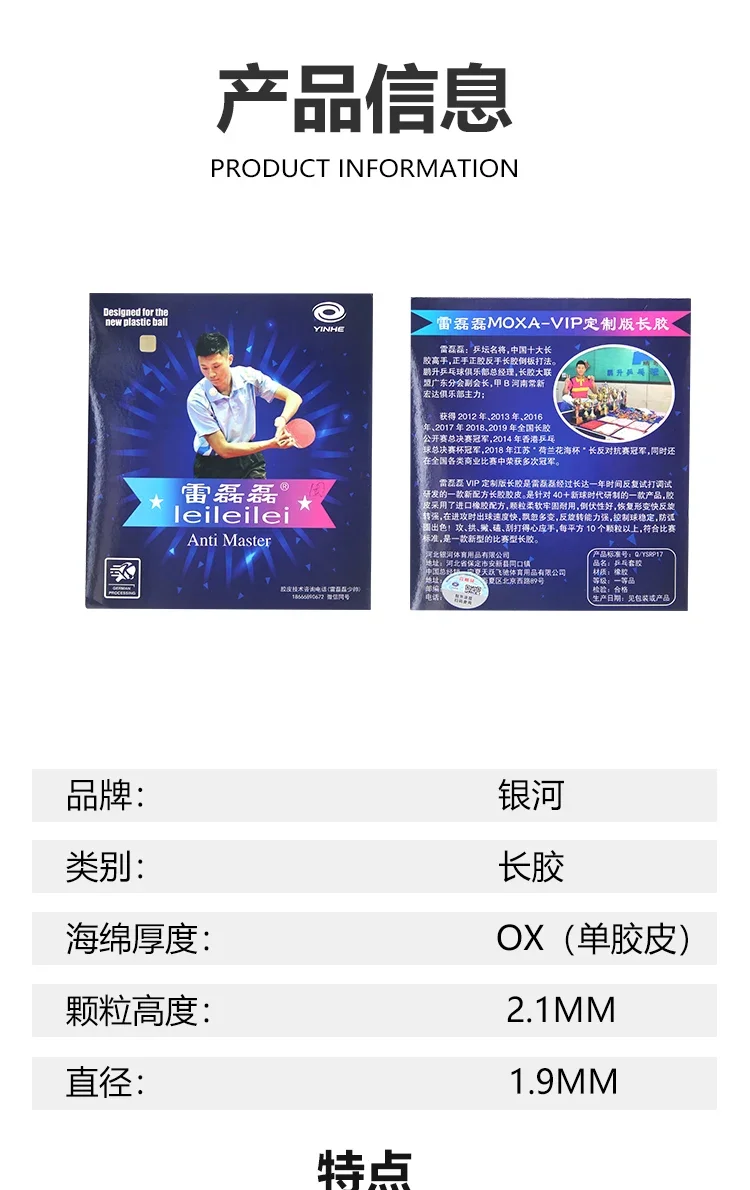
Brand: YINHE
Brand Name: NONE
Choice: yes
High-concerned chemical: none
Origin: Mainland China
Rubber type: Long Pimples
Deep - curing, soft - curing, and non - curing have the following similarities and differences:
Similarities
- Basic Structure: Whether it is deep - cured, soft - cured, or non - cured, single - layer rubbers are usually composed of a rubber surface layer, and some may be used with a sponge. Their basic structure is to use the rubber surface to contact the ball, and the sponge (if any) plays a role in buffering and accelerating the ball.
- Belong to Pimpled Rubbers: They all belong to the category of pimpled rubbers, with rubber pimples facing outward, which is different from the inverted rubbers with pimples facing inward. This outward - facing pimple structure endows them with some unique playing characteristics, such as difficulty in generating spin, and being more likely to produce reverse - spin effects.
Differences
- Hardness and Touch Feeling: Deep - cured rubbers have the highest hardness. After deep - curing treatment, the rubber particles are firmly fixed, and the surface is very hard, with a strong sense of stiffness when touched. Soft - cured rubbers have a relatively lower hardness, and the rubber particles are slightly harder than non - cured ones, but still maintain a certain softness, with a touch feeling that is harder than non - cured but softer than deep - cured. Non - cured rubbers are the softest, with obvious softness and good elasticity, and can be easily stretched by hand.
- Friction and Spin - generating Ability: Deep - cured rubbers have the lowest friction. The deep - curing process greatly reduces the surface friction coefficient of the rubber, making it difficult for the ball to generate spin when contacting the rubber, and it is easy to slide, which is very suitable for defensive plays to receive arc - shaped balls. Soft - cured rubbers have a moderate friction, which is between deep - cured and non - cured. They can generate a certain amount of spin, but it is still weaker than non - cured rubbers. Non - cured rubbers have the largest friction among the three. The soft rubber surface can better grip the ball, and players can more easily generate spin when hitting the ball, which is more conducive to offensive plays.
- Ball - hitting Performance: Deep - cured rubbers have the most obvious reverse - spin effect. When hitting the ball, the trajectory of the ball is very strange, which is difficult for opponents to adapt to, and is very effective in preventing arc - shaped balls, but the initiative to attack is poor. Soft - cured rubbers have a relatively mild reverse - spin effect, and the ball - hitting speed is relatively faster than that of deep - cured rubbers, and they can be used for both defense and certain offensive shots. Non - cured rubbers are relatively easy to control the ball, and the ball speed is affected by the elasticity of the rubber itself and the force of the player. They are suitable for players who are good at offensive play and like to actively create attack opportunities.
- Appearance and Durability: Deep - cured rubbers usually have a smooth and shiny surface, because the curing process makes the surface of the rubber dense. They also have the best durability and are not easy to be damaged. Soft - cured rubbers have a slightly matte surface, and the gloss is not as good as that of deep - cured rubbers, and their durability is better than that of non - cured rubbers, but worse than that of deep - cured rubbers. Non - cured rubbers have a non - shiny surface, and they are relatively easy to be worn and deformed during use, and have the shortest service life among the three.
一、Process Principles and Structural Differences
Deep Curing
- Principle: Through chemical reagents or high-temperature treatment, cross-linking reactions occur in the surface to internal structure of the rubber, and the curing layer penetrates deeply (up to 1/3 or more of the rubber thickness).
- Structural Features: A hard and dense curing layer is formed on the surface, the internal sponge is more tightly combined with the surface, and the overall hardness is significantly improved.
Soft Curing
- Principle: The degree of curing treatment is weak, and only the shallow layer of the rubber surface (usually 1/5 to 1/10 of the rubber thickness) is mildly cross-linked, retaining the softness of the internal sponge.
- Structural Features: There is a thin and flexible curing layer on the surface, and the bottom sponge still maintains high elasticity, forming a composite structure of "hard outside and soft inside".
Non-Curing
- Principle: No curing treatment is performed at all. The rubber surface is made of original rubber material, retaining the flexibility and adsorption of natural rubber.
- Structural Features: There is no curing layer on the surface, the rubber molecular chains move freely, and both the sponge and the surface are in a naturally soft state.
二、Performance Comparison
| Dimension | Deep Curing | Soft Curing | Non-Curing |
|---|---|---|---|
| Hardness | High (hardness value 40-50 degrees) | Medium (hardness value 30-40 degrees) | Low (hardness value 20-30 degrees) |
| Elasticity | Medium (curing layer restricts sponge deformation) | High (thin surface curing layer allows full release of sponge elasticity) | Extremely high (natural rubber has the best elasticity) |
| Friction | Medium (high surface smoothness) | High (slightly rough surface, curing layer retains certain adsorption) | Highest (original rubber surface has strong viscosity) |
| Speed | Fast (hard surface reduces energy loss) | Relatively fast (combination of hardness and softness improves ball exit efficiency) | Medium (relies on active force) |
| Control | Poor (hard surface is not easy to create spin) | Good (soft curing layer balances speed and friction) | Excellent (strong surface viscosity enables precise spin control) |
| Durability | Strong (curing layer resists wear) | Medium (thin surface curing layer is prone to wear) | Weak (natural rubber is prone to oxidation and aging) |
三、Applicable Scenarios and Playing Style Differences
Deep Curing
- Suitable Playing Styles: Fast attack and pimple rubber (such as penhold pimples-out and shakehand pimples) styles, relying on close-table fast hitting and power suppression.
- Scenarios: Requiring high-speed ball exit and impact resistance, such as backhand fast blocking and forehand smash, suitable for power-type players.
Soft Curing
- Suitable Playing Styles: Loop combined with fast attack, and all-around mid-close table styles, pursuing a balance between speed and spin.
- Scenarios: Forehand continuous loop and backhand flick transition, suitable for players with comprehensive skills and emphasis on ball control feel.
Non-Curing
- Suitable Playing Styles: Chopping and high-spin loop styles, relying on the natural viscosity of the rubber to create strong spin.
- Scenarios: Forehand topspin loop and backhand side chop, suitable for players who rely on spin changes and feel control (such as traditional inverted rubber players).
四、Maintenance and Service Life
- Deep Curing: Due to the dense surface, it is not easy to stick dust, simple to maintain, and the service life can reach 6-12 months.
- Soft Curing: The surface curing layer is thin, and friction with hard objects should be avoided. The service life is about 3-6 months.
- Non-Curing: Natural rubber is prone to oxidation and needs to be wiped regularly with a special cleaner. The service life is the shortest (1-3 months).
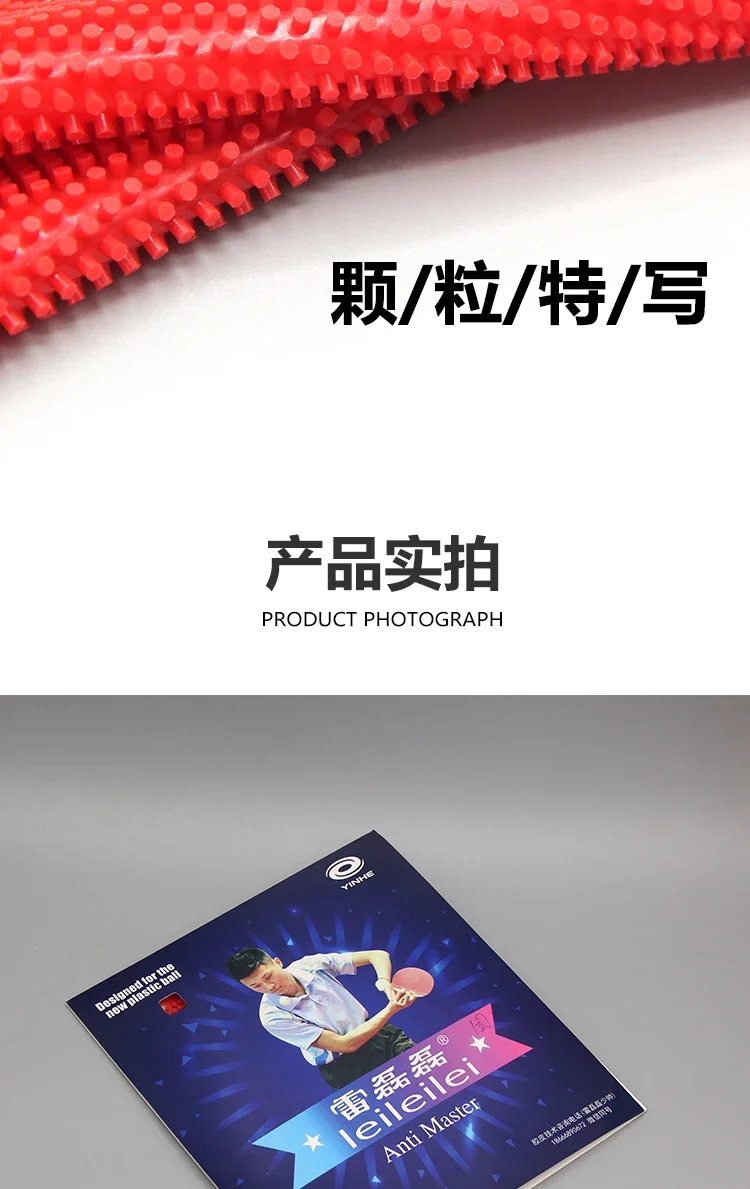
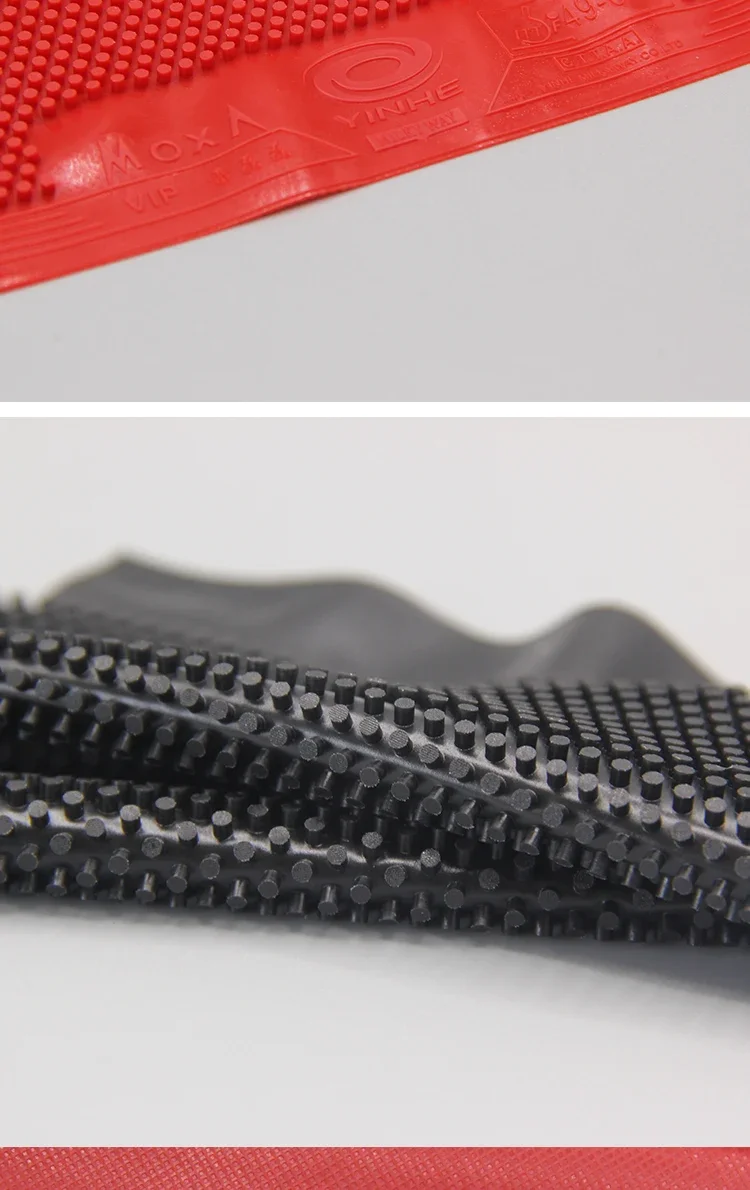
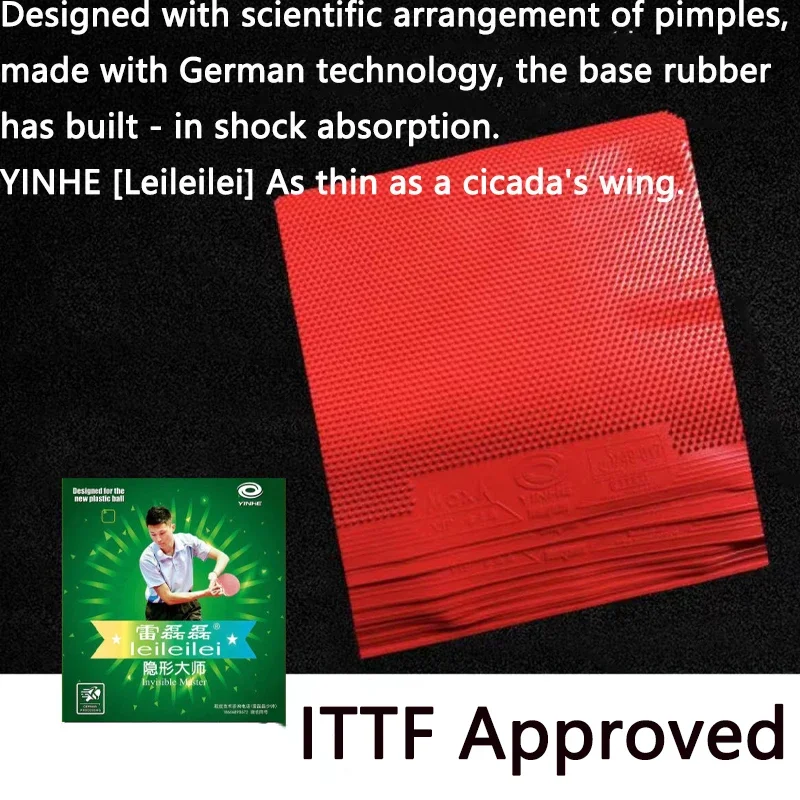
Designed with scientific arrangement of pimples, made with German technology, the base rubber has built - in shock absorption.
YINHE [Leileilei] As thin as a cicada's wing.
Leileilei
Invisible Master
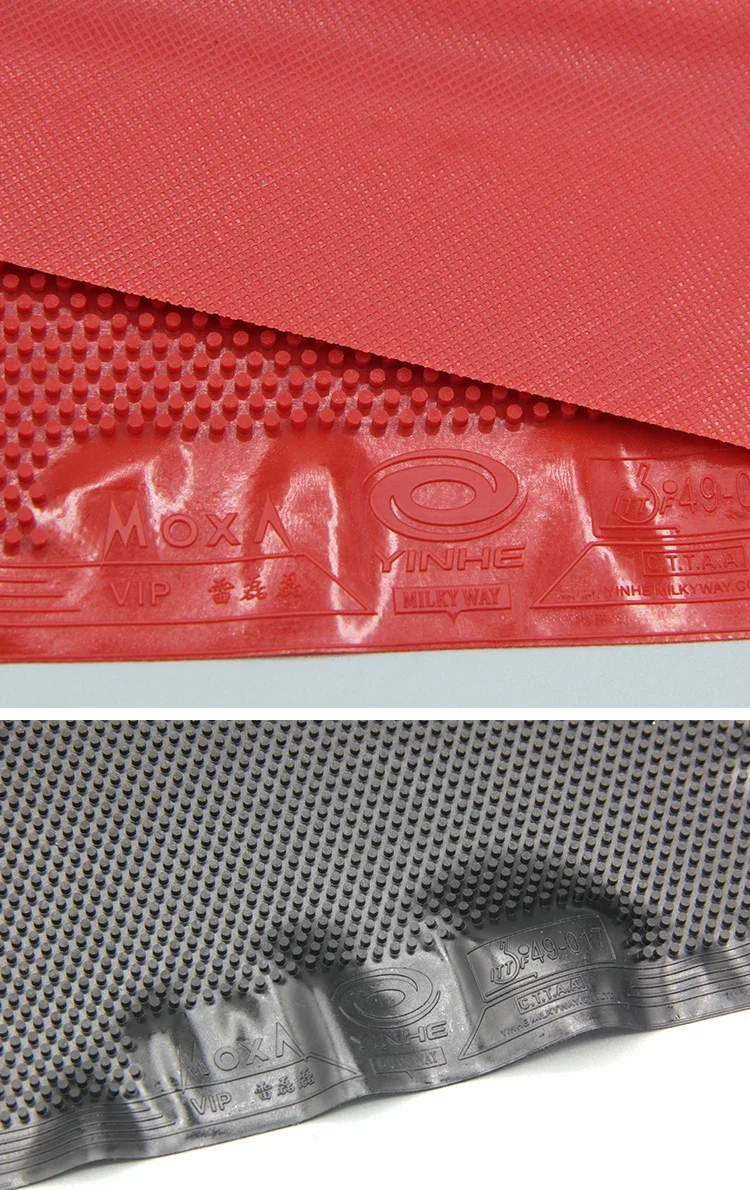
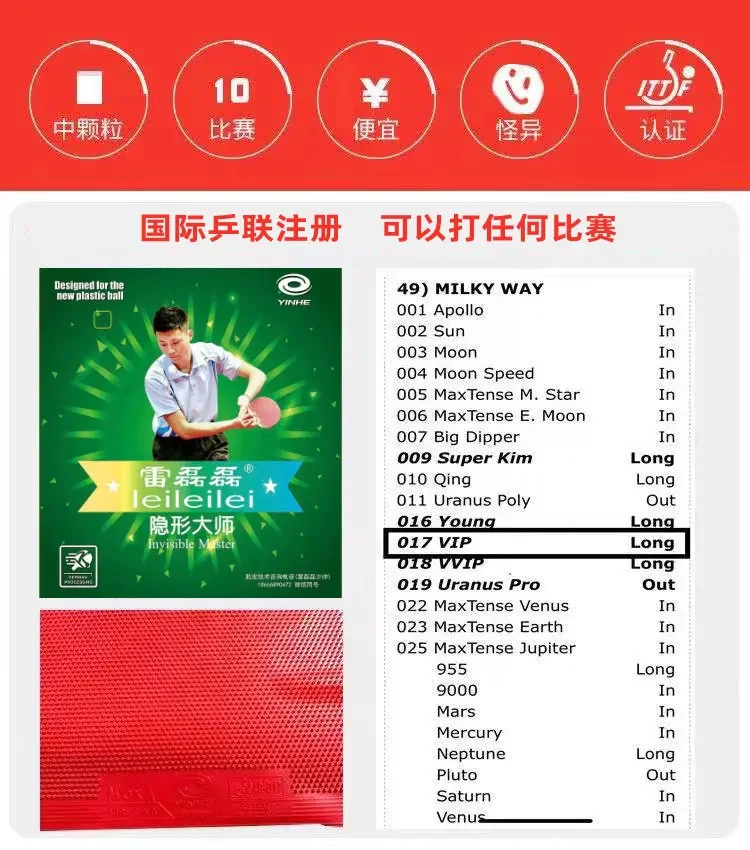
Certified by the International Table Tennis Federation
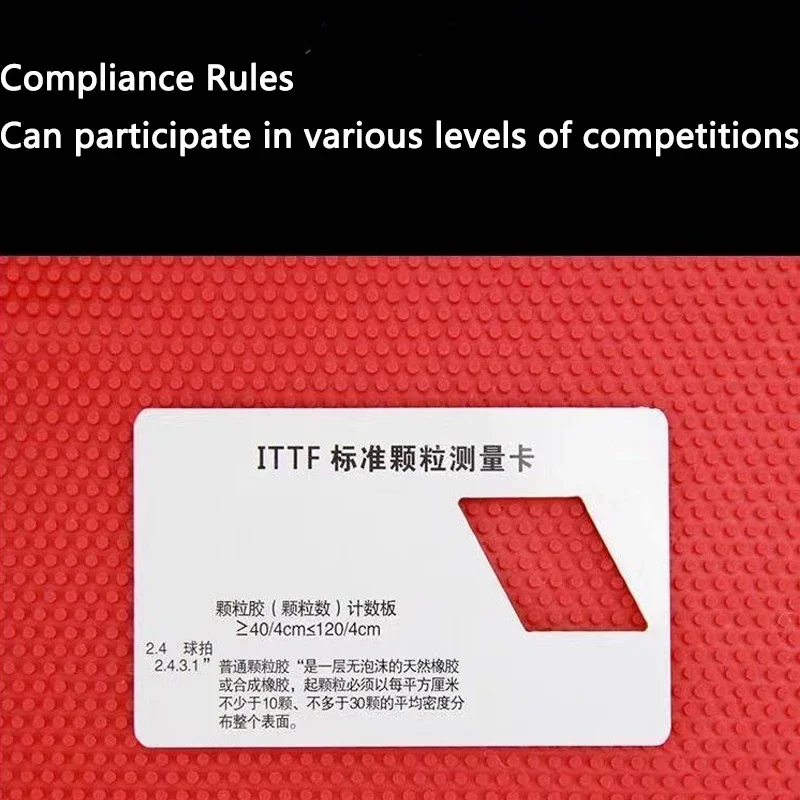
Can participate in various competitions! It has been certified by the International Table Tennis Federation!
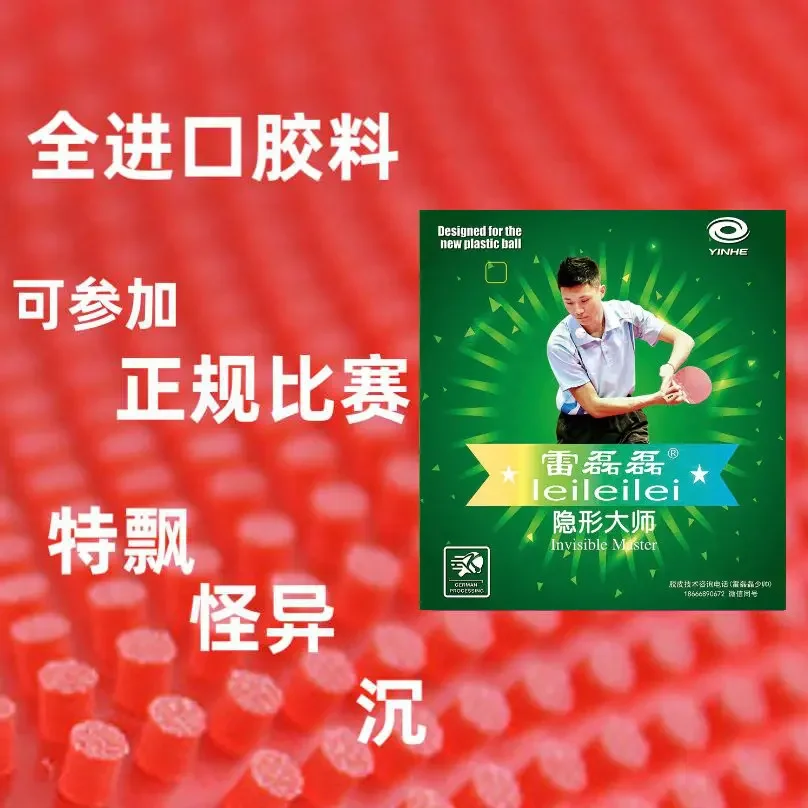
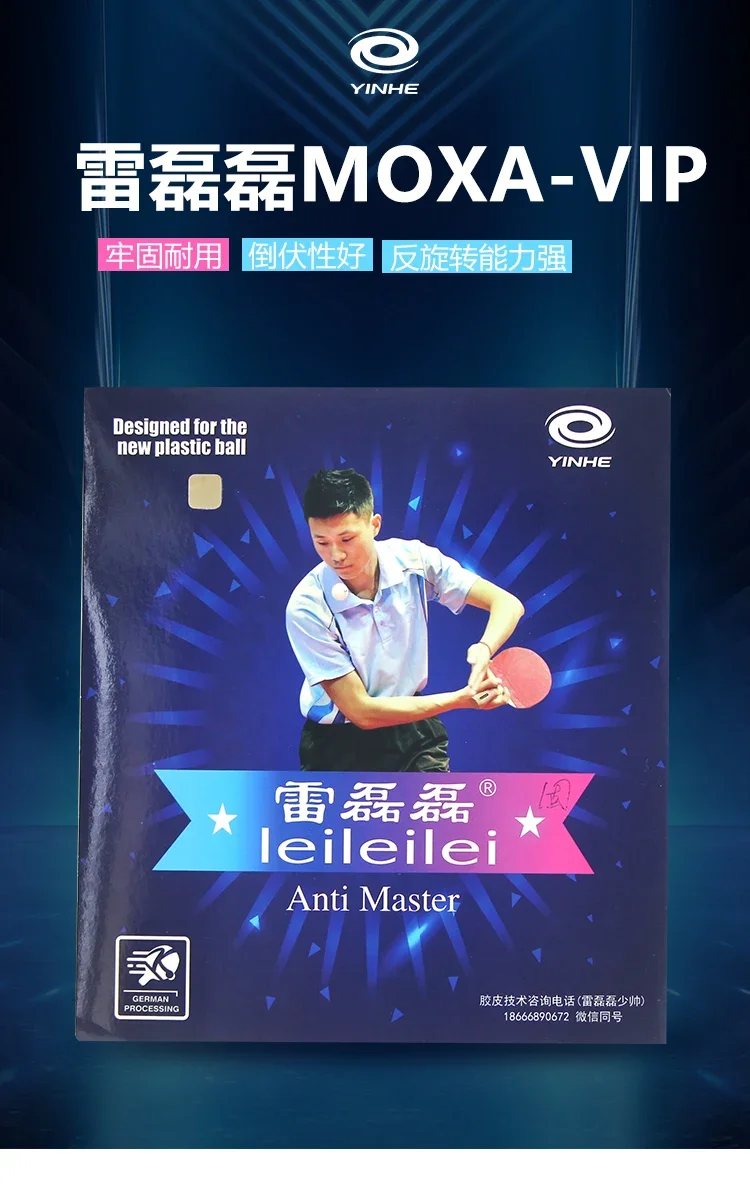
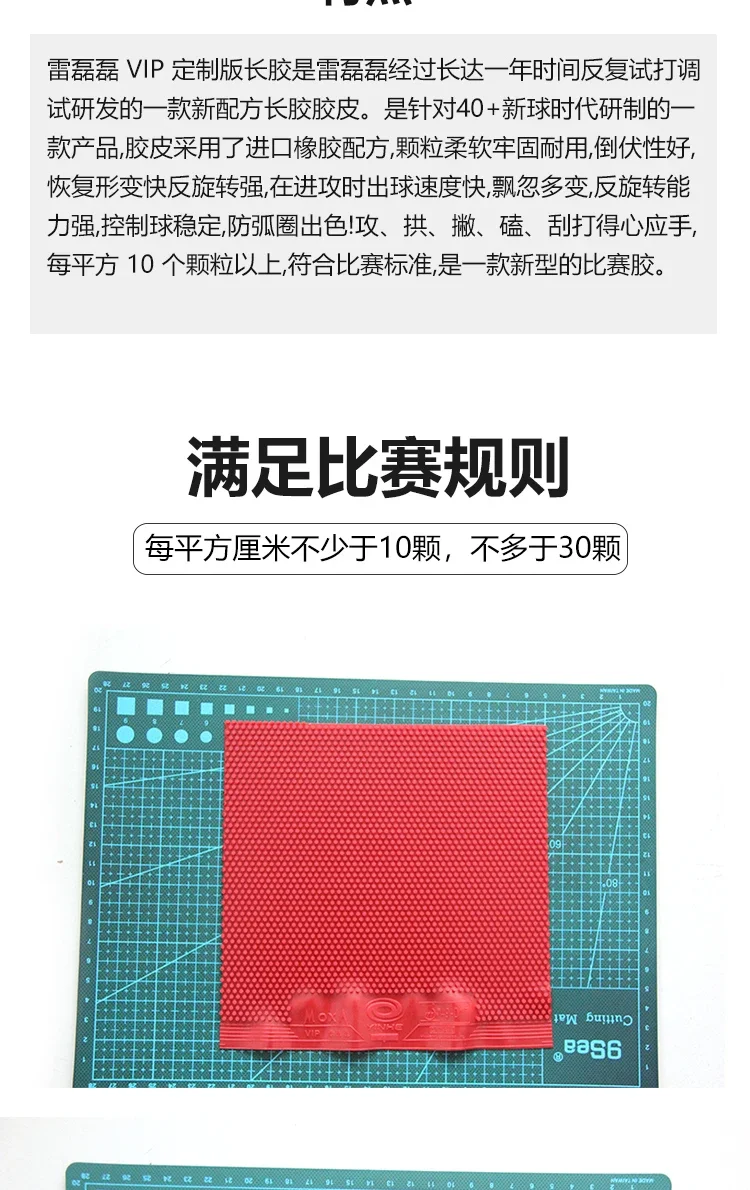
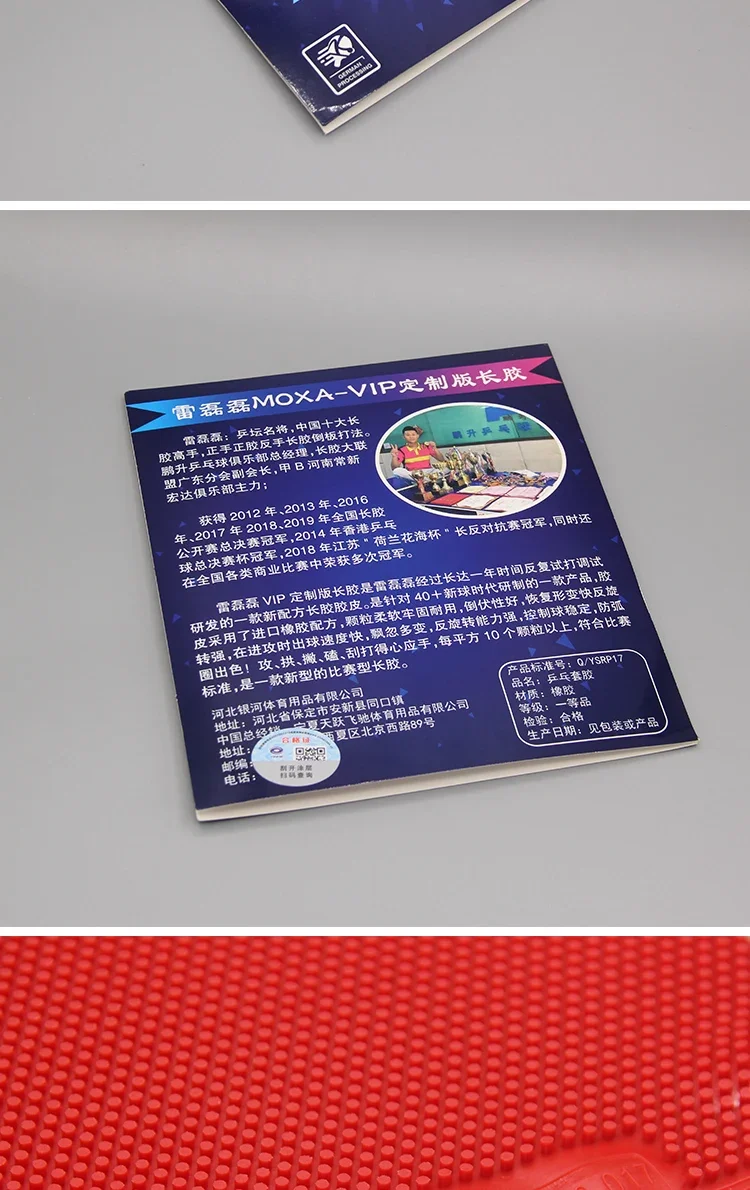
The Lei Leilei VIP Custom Long Pips is a newly formulated long pips rubber developed by Lei Leilei after a year of repeated testing and adjustments. Designed for the 40+ plastic ball era, this product features an imported rubber formula. The pips are soft yet durable, with excellent bending properties and quickshape recovery, providing strong spin reversal.
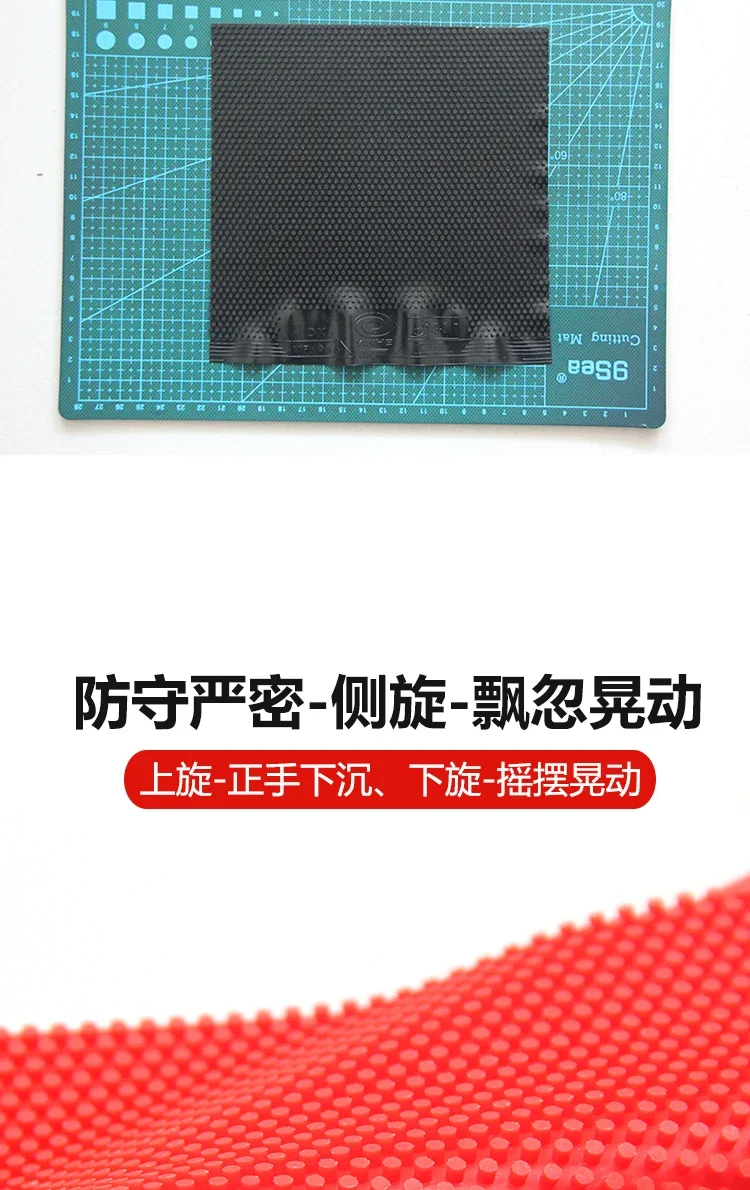
During attacks, the ball exits with high speed and unpredictable movement, while maintaining strong spin reversal and stable ball control. It excels in defending against loops and performs effortlessly in attacking,lifting,side brushing,chopping, and scraping techniques. With over 10 pips per square centimeter, it meets competition standards, making it a cutting-edge tournament rubber.